 Charge
 Ambush
 Raid
Raid Predator
 Swarm
Swarm Flee
Flee Withdraw
 Standoff
Terrain
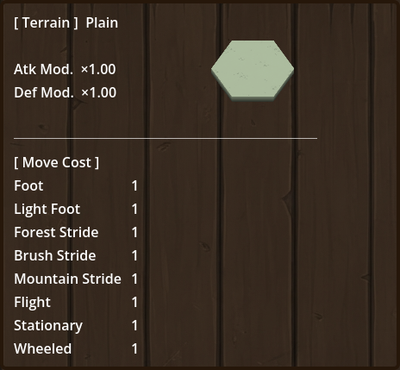
Every hex on the board carries a terrain. Terrain is split into a layer that holds the rules and a layer that holds the look, so two hexes that look different behave identically if their rule layer is the same. That is why a ridge and a granite ridge, or a plain and a cave floor, play the same.
Attack and Defense
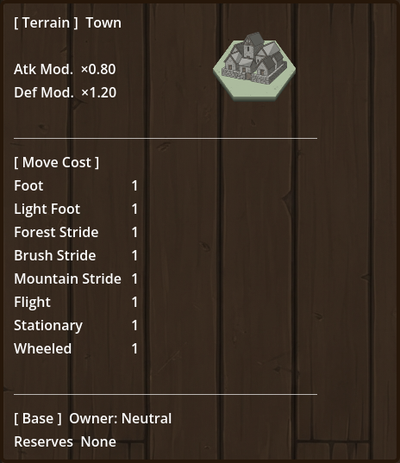
Terrain carries separate factors for attack and for defense. The factors of the hex a unit stands on apply to that unit. Some terrain favors attacking and some favors holding, so where you receive an attack and where you shoot from is part of the puzzle.
Ground and Objects
Terrain is either ground (the surface itself) or an object (something sitting on top of it). Only one of them supplies the rules for a hex, so the ground drawn under an object is decoration only — it plays no part in attack, defense, enemy detection or movement.
Elevation
The board has relief, but height is presentation only — it does not enter movement cost, terrain factors or enemy detection. What can and cannot be crossed is decided by the terrain placed there. A cliff blocks you because impassable terrain was placed on it, not because it is tall.